Horst Farm
Located near Red Deer, Alberta, Horst Farm is owned and operated by Wim van Wijk. Their conversion to ESF and group sow housing began in 2013.
Overview
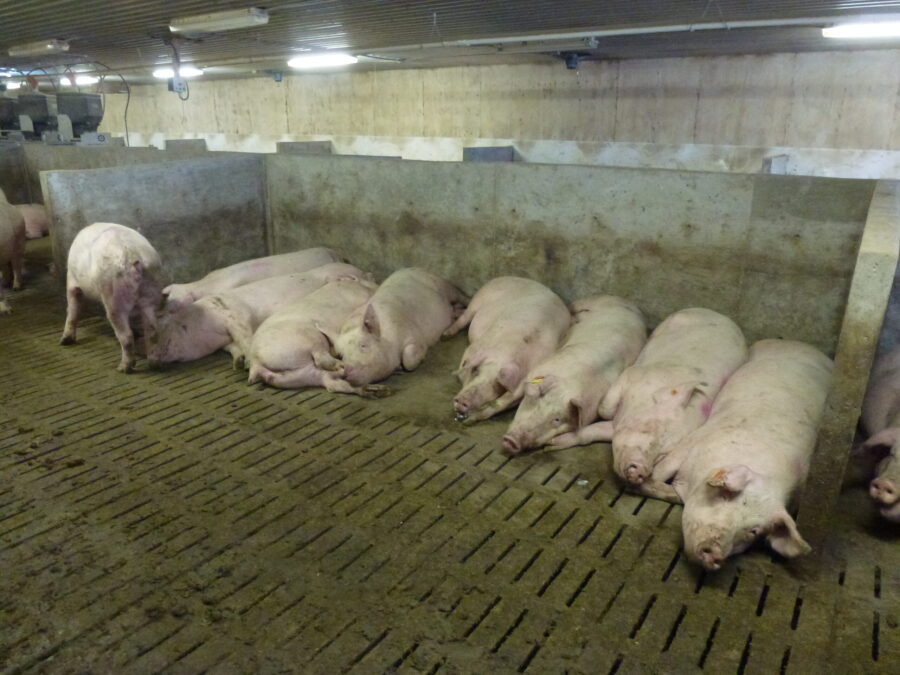
Horst Farm is owned by Wim van Wijk who emigrated to Red Deer, Alberta, after working for many years as a pork producer in Holland. In 2013 van Wijk depopulated his herd, and decided to convert the gestation barn to group housing before repopulation. van Wijk is a progressive farmer who also participates in a local benchmarking group to share experiences and new ideas on pork production.
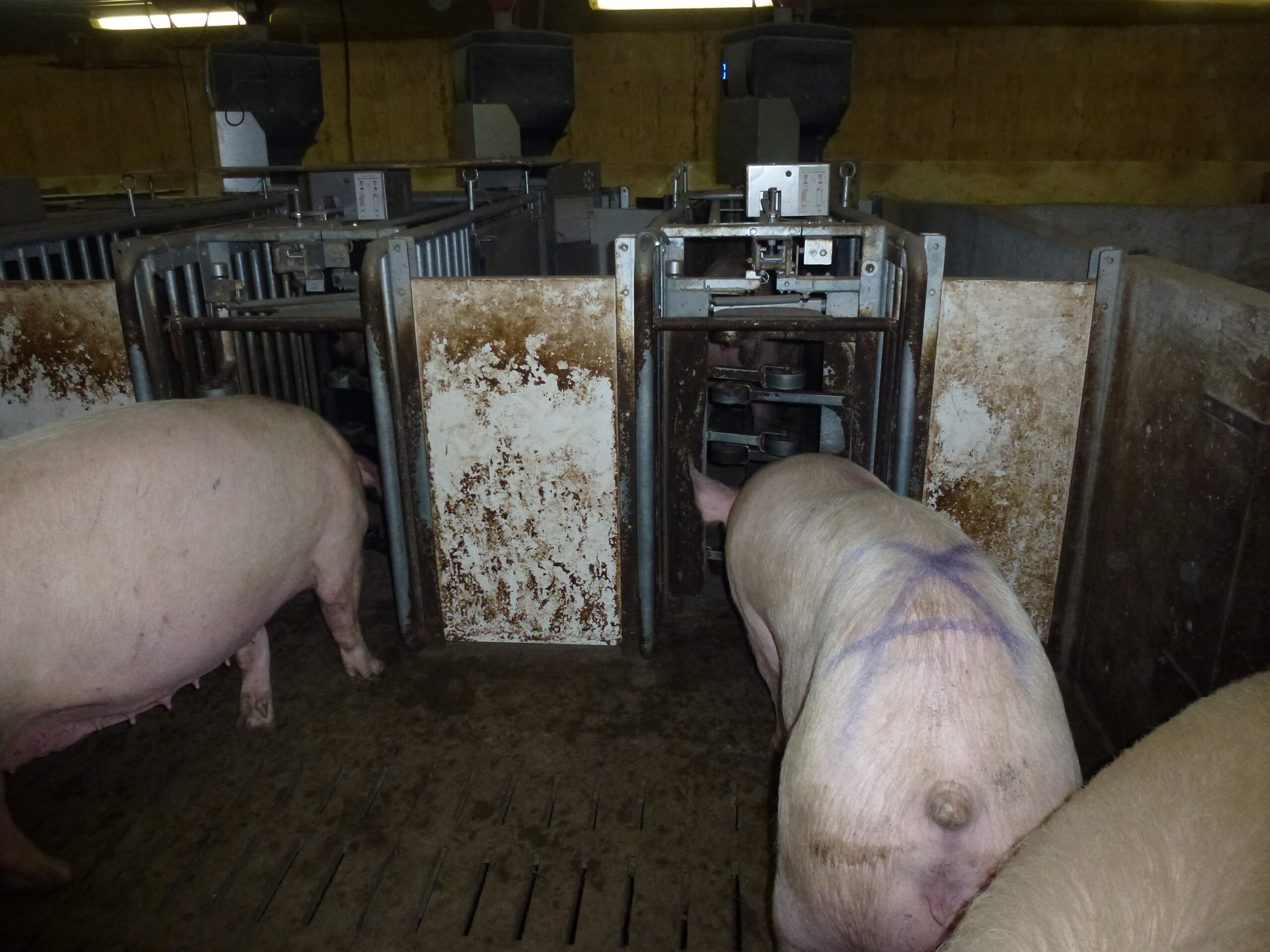
The Horst Farm housing conversion was very cost effective; van Wijk did most of the renovation work himself and kept the existing lighting and ventilation systems. To complete the project, a new manure pit was added at one end of the room, slatted floors were replaced, and new concrete partition walls were added in addition to the purchase of 3 Nedap ESF feeders. The final cost of the renovation was approximately $254/sow place (excluding labour), and took two months to complete.
Gestation Room Layout
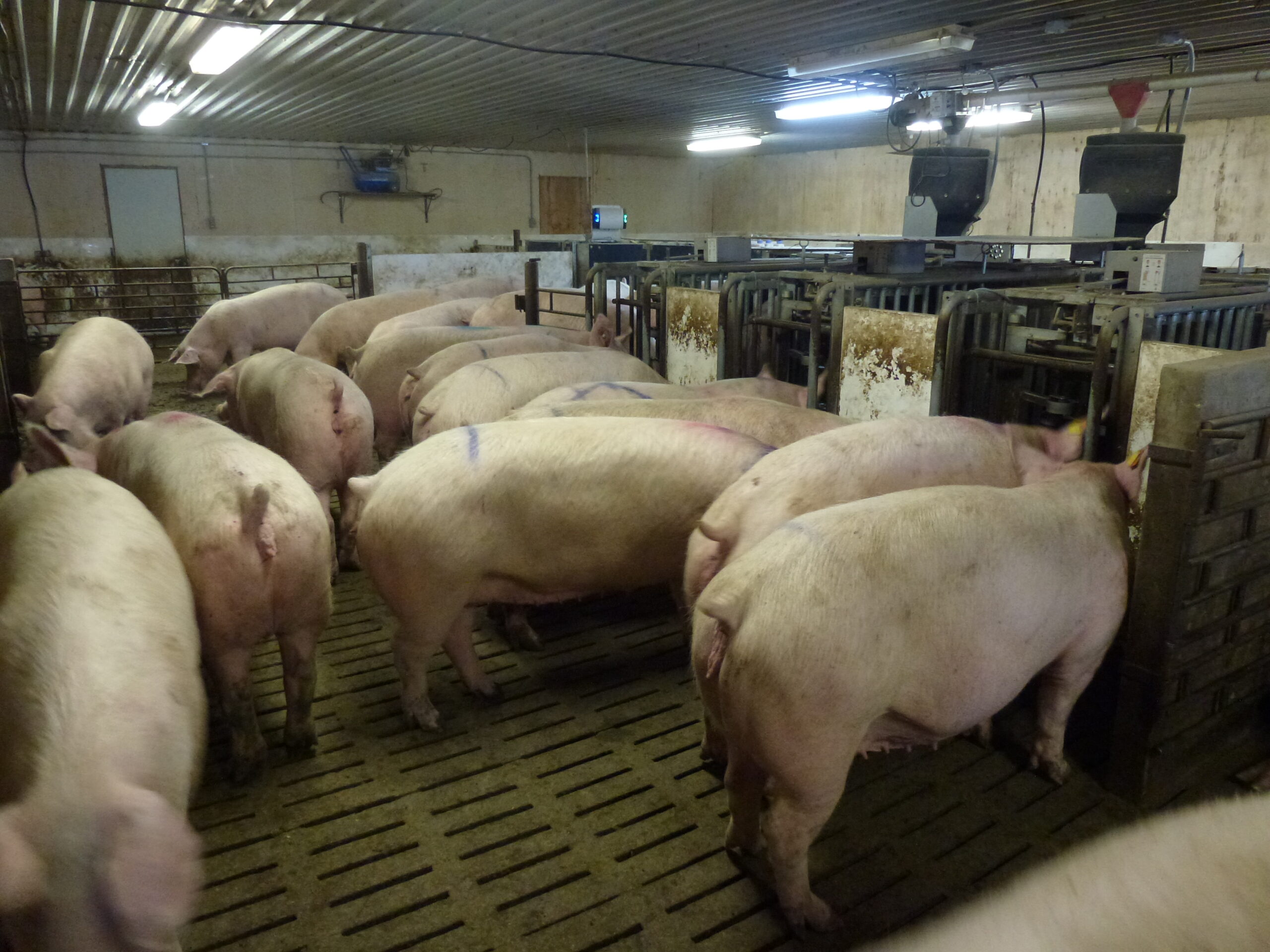
The new gestation area makes maximum use of floor space. Penning is flexible, with multiple gates that can be used to help train animals and to form a sorting pen when necessary. Most of the time the gates are left open to provide additional pen space. As with most Nedap ESF designs, the pen has a circular ‘racetrack’ layout. Once a sow passes through the feeder, she must walk around the entire room to return to the feeder. This design discourages sows from recycling through the feeder multiple times per day.
System Management
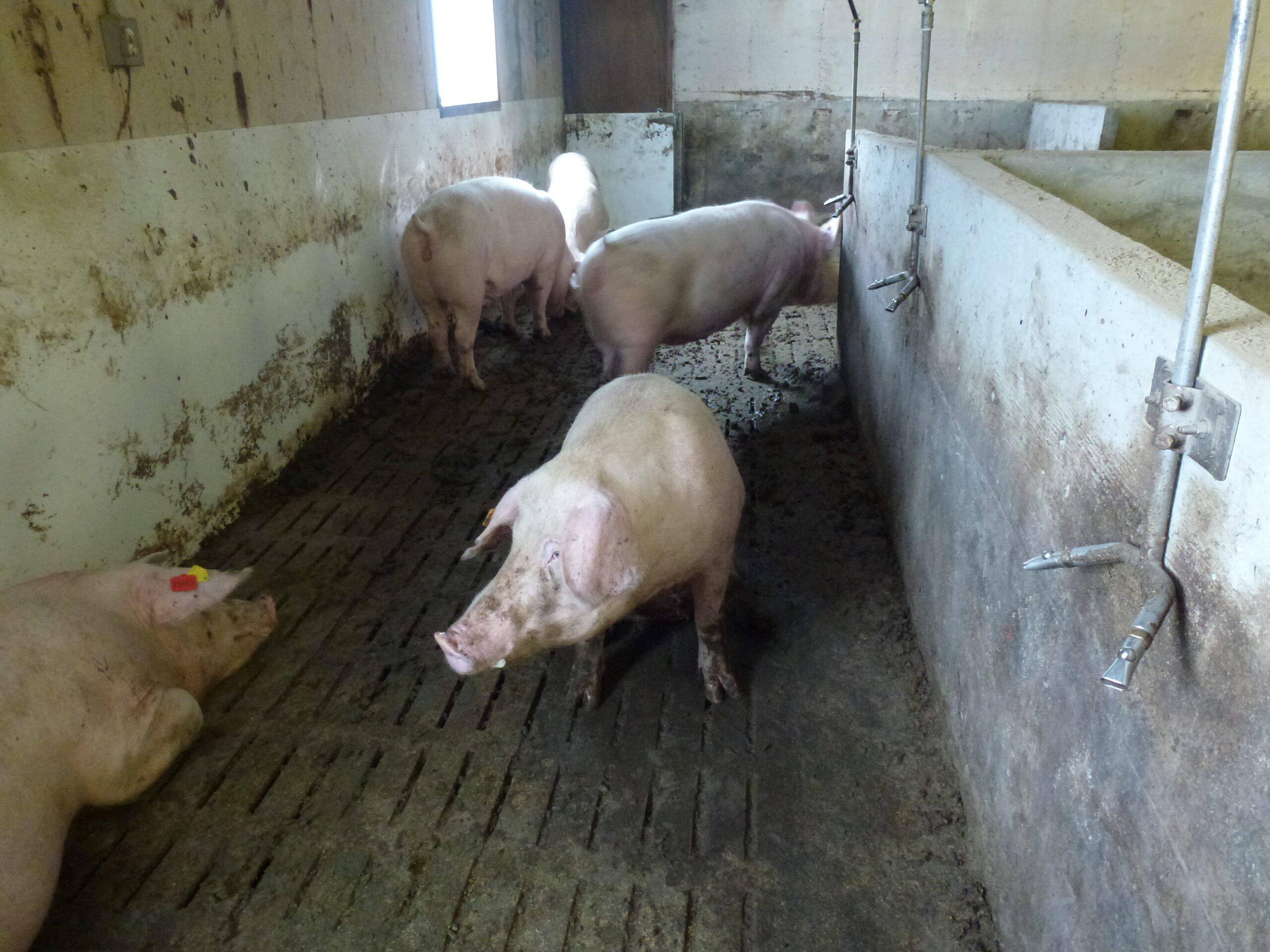
A few breeding stalls were kept, and sows are grouped shortly after breeding. Pregnancy checking is done in the group pens, and sows are calm and allow checking without any restraint. Van Wijk is pleased with the results and feels that pregnancy checking is easier in the open pen than in stalls where sows can be harder to reach.
Since the herd was repopulated, direct production comparisons before and after are not possible. However, van Wijk reports that the new herd is much calmer and easier to work. In particular, moving sows to the farrowing room is much easier: the job used to take two people now takes only one person, and less time. Better handling is a common observation for group housed sows, not only are the sows fitter they are also calmer and more used to handling compared to stall-housed sows. van Wijk has also noted that his group-housed sows have notably healthier feet than his old stall-housed sows, which he attributes to genetics, good new flooring, and increased activity and movement.
