The BASICS of SOW WELFARE
Understanding the root of both positive and negative sow behaviour, and how we can support good animal welfare.
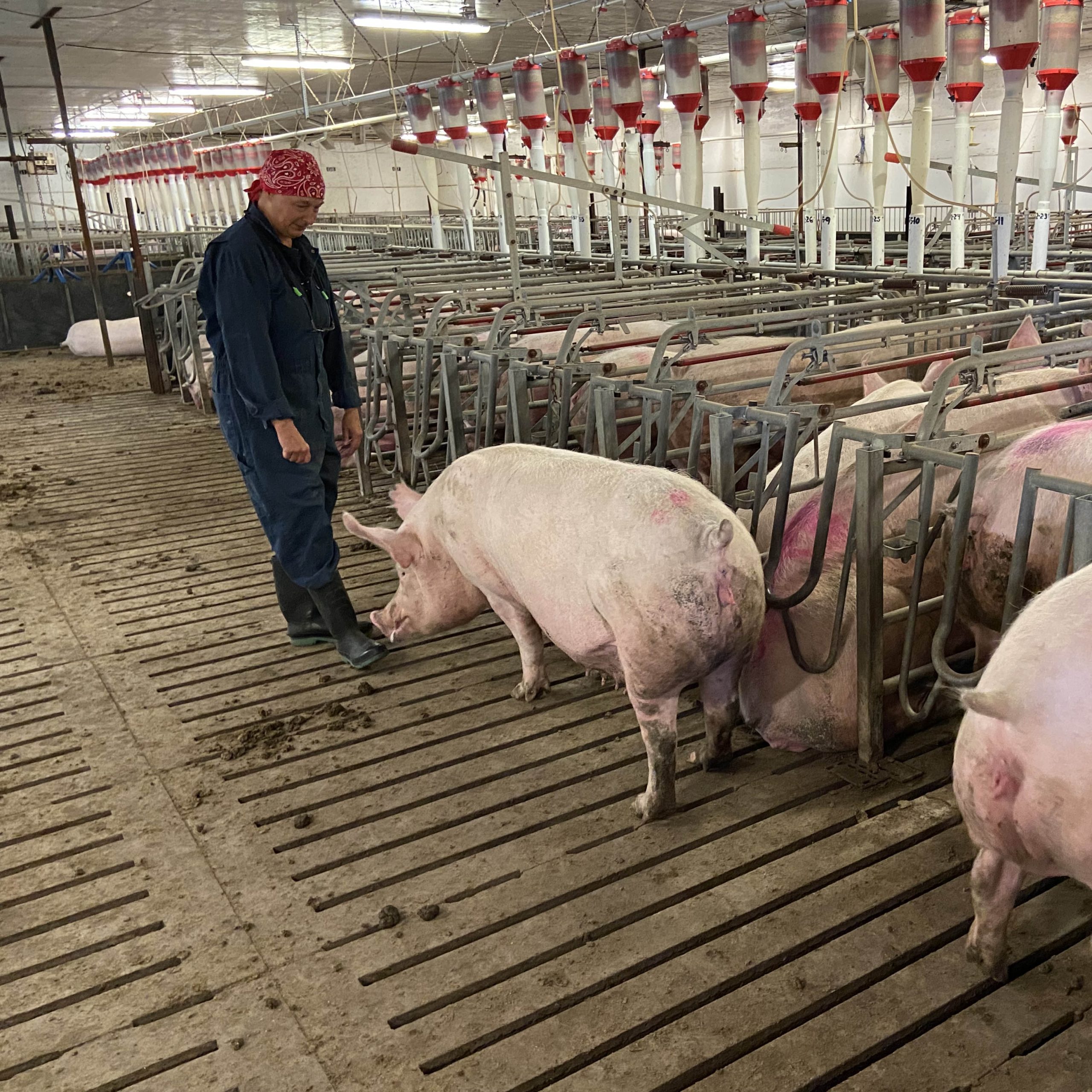

Our goal is to facilitate the successful adoption of group housing and effective management methods, ensuring that the transition results in housing and management that is profitable and meets the needs of sows and producers. These changes will also meet changing expectations within the marketplace, helping to ensure markets for Canadian pork products both at home and abroad.
As researchers, studying positive, negative, and neutral animal behaviours as well as different aspects of sow health and productivity, helps us understand the impact of different styles of sow housing. For producers, understanding how housing style can truly effect animal health, productivity, and welfare will help ease the transition into mandatory group sow housing.
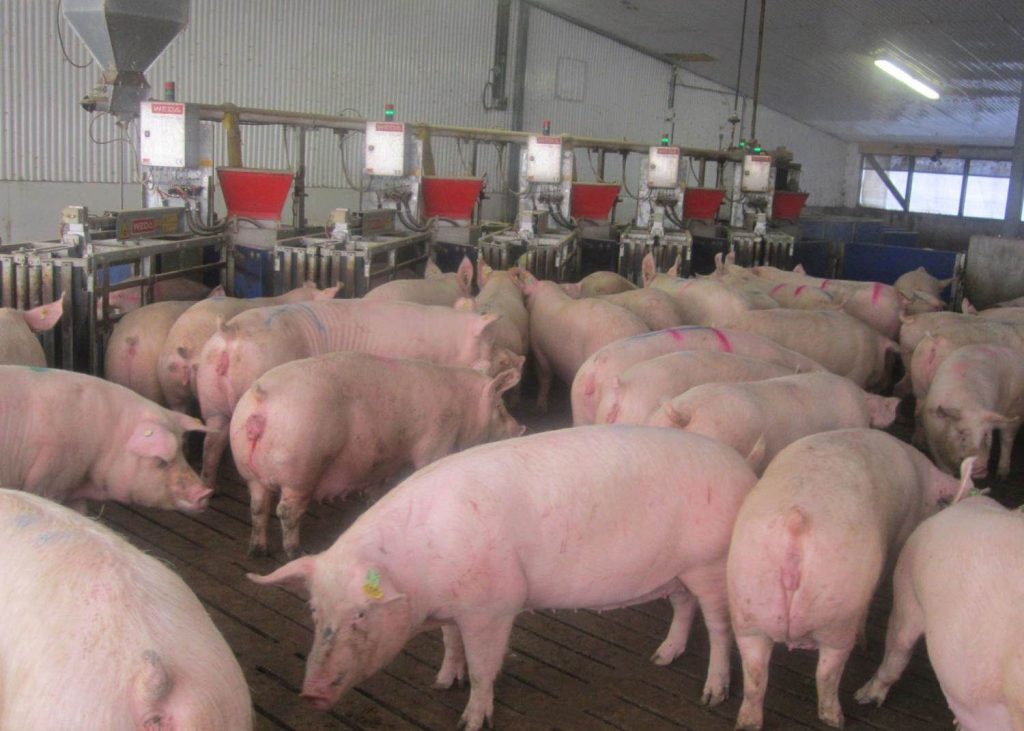
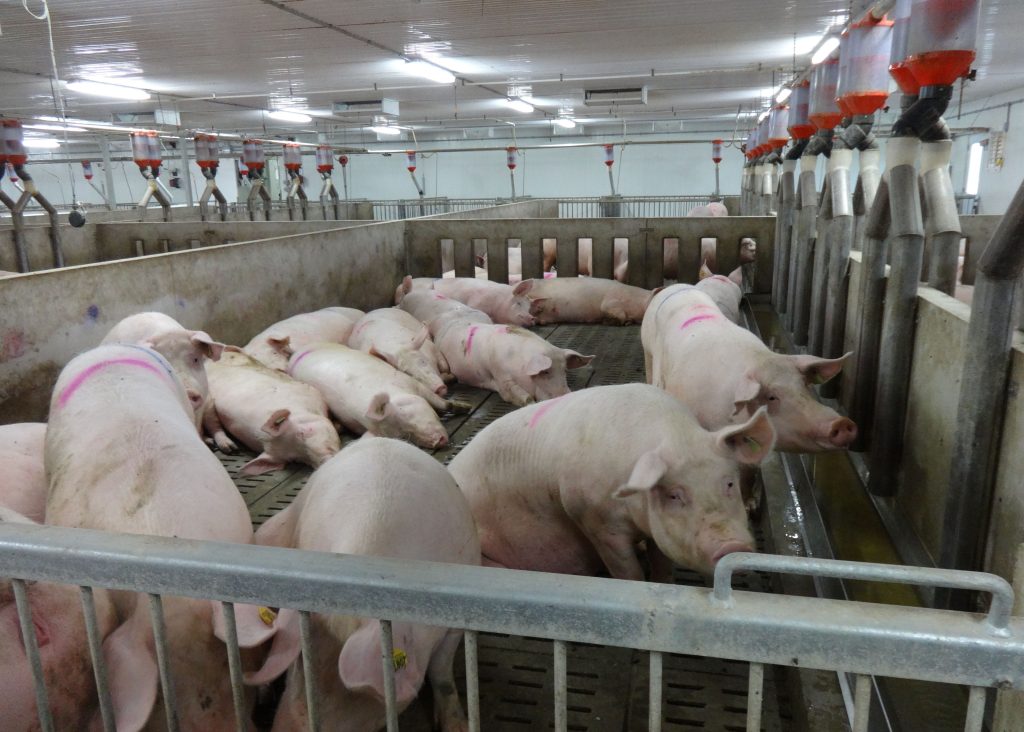
Housing style dictates the ability of sows to exhibit natural behaviours, as well as chances to be active and social.
Group housing allows for...
- Freedom of movement.
- Increased exercise.
- Greater social interaction and the formation of positive relationships.
- A more satisfactory work environment, as sows are often more docile.
Group housing allows for sows to be more active during gestation. Being able to exercise and display more natural behaviours, factors related to sow health and productivity have been seen to improve.
- Well-managed group housing systems can reach improved reproductive performance.
- Increased activity may benefit musculoskeletal health, which can extend sow longevity.
In Canada, guidelines for swine welfare are laid out in the Code of Practice for the Care and Handling of Pigs, released in 2014 by the National Farm Animal Care Council. In 2019, the Code of Practice was reviewed, and a further update was initiated in 2024.
Animal welfare is generally based on five major freedoms;
- Freedom from hunger and thirst.
- Freedom from discomfort.
- Freedom from pain, injury, and disease.
- Freedom to express normal behaviour.
- Freedom from pain and distress.
Wild pigs usually live quite harmoniously in groups with numerous sows and their offspring. However, these groups rarely incorporate unfamiliar sows; if an 'outsider' sow attempts to join the group, she will likely be attacked and forced to leave. In commercial production, we add 'intruder' sows and 'resident' sows may attempt to drive them out, though these animals cannot leave.
Group housing may result in some mixing aggression, but this generally only lasts for around 3-4 hours after mixing. After a hierarchy is established, sows should not display undue aggression. Proper training of gilts and sows and good housing design are important factors in reducing initial aggression.
In static groups;
- Hierarchy tends to be more stable.
- Feeding style may dictate the incidence of aggression, as competitive feeding systems may result in more fighting than non-competitive systems.
In dynamic groups;
- Bouts of aggression occur as subgroups of sows are added and removed from the main group.
- As time goes on, the larger group will become more tolerant of 'unfamiliar' animals and develop a more passive response.
- Adequate space and the addition of dividing walls to allow animals to hide can help reduce aggression with this housing style.
Mixing aggression does not tend to lead to severe injury. The majority of injuries resulting from fighting are surface scratches to the skin, generally on the neck and shoulders.
Younger, smaller sows tend to receive a greater number of injuries. Older animals are more likely to instigate fights. This highlights the hierarchical nature of mixing aggression.
Strategies to mitigate mixing aggression should be decided on based on group size and housing style.
Grouping strategies;
- Creating groups based on size/age/parity can even out competition in the group.
- Grouping sows by size is especially advantageous in competitive feeding systems.
- Separating younger, smaller sows from older, larger sows reduces competition.
- Grouping by size/age/parity is also advantageous when using ESF, as competition for feeder access is reduced.
- When using free-access stalls, grouping by size/age/parity can reduce the amount of time that younger animals spend hiding in stalls.
Group size;
- Smaller groups of sows will form a linear hierarchy which can be easily upset when new animals are added.
- Maintaining larger groups, especially if using dynamic grouping, can reduce aggression. Larger groups of sows (≥40 sows) tend to create sub-groups, so adding and removing groups does not upset the group at large.
- Using an 'introduction' pen can allow animals that will enter the group together to get to know each other. This can encourage them to become a sub-group when they join the large group.
Pen design;
- Including barriers such as short walls can provide a place for newly added sows to hide while the group adjusts.
- Ample pen space, good flooring, and enrichment can also help alleviate mixing aggression and reduce the risk of injury.
