Geene Farms
Located near Lake Huron, Ontario, Geene Farms was built in 2011 with an open housing layout.
Overview
The Geene farm is a 1400 sow farrow-to-wean barn by Lake Huron, Ontario. The barn was newly built in 2011, with gestating sows housed in groups fed via a competitive feeding system. Geert Geene’s family had always managed sows in groups, so group housing was a natural choice when developing the new barn.
Gestation Room Layout
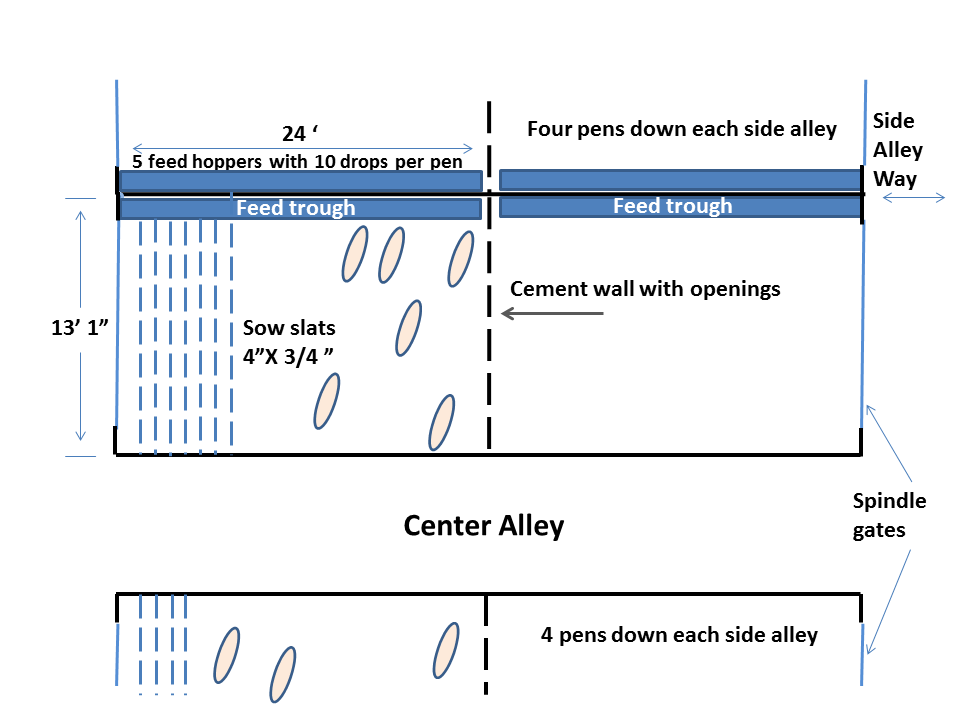
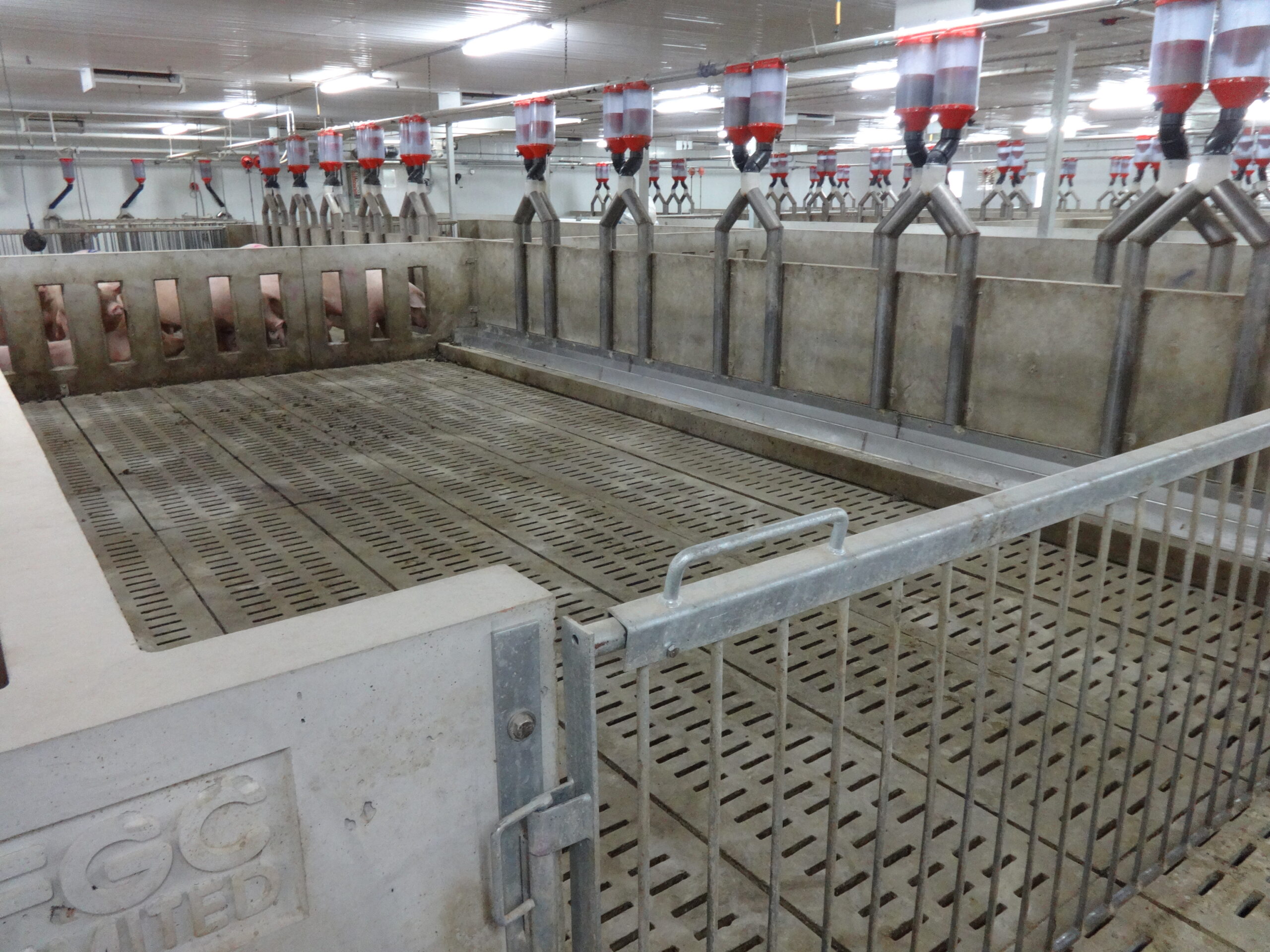
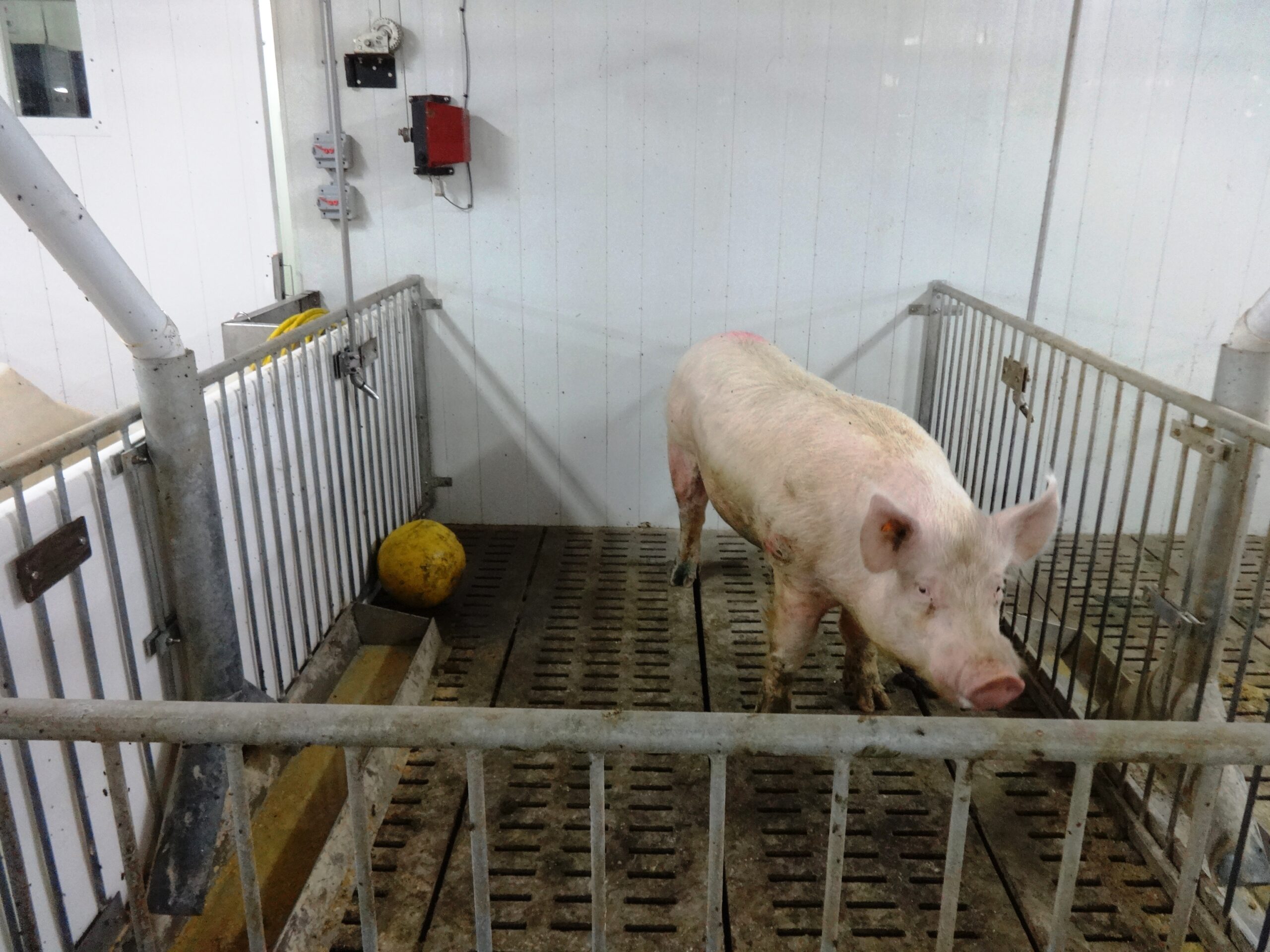
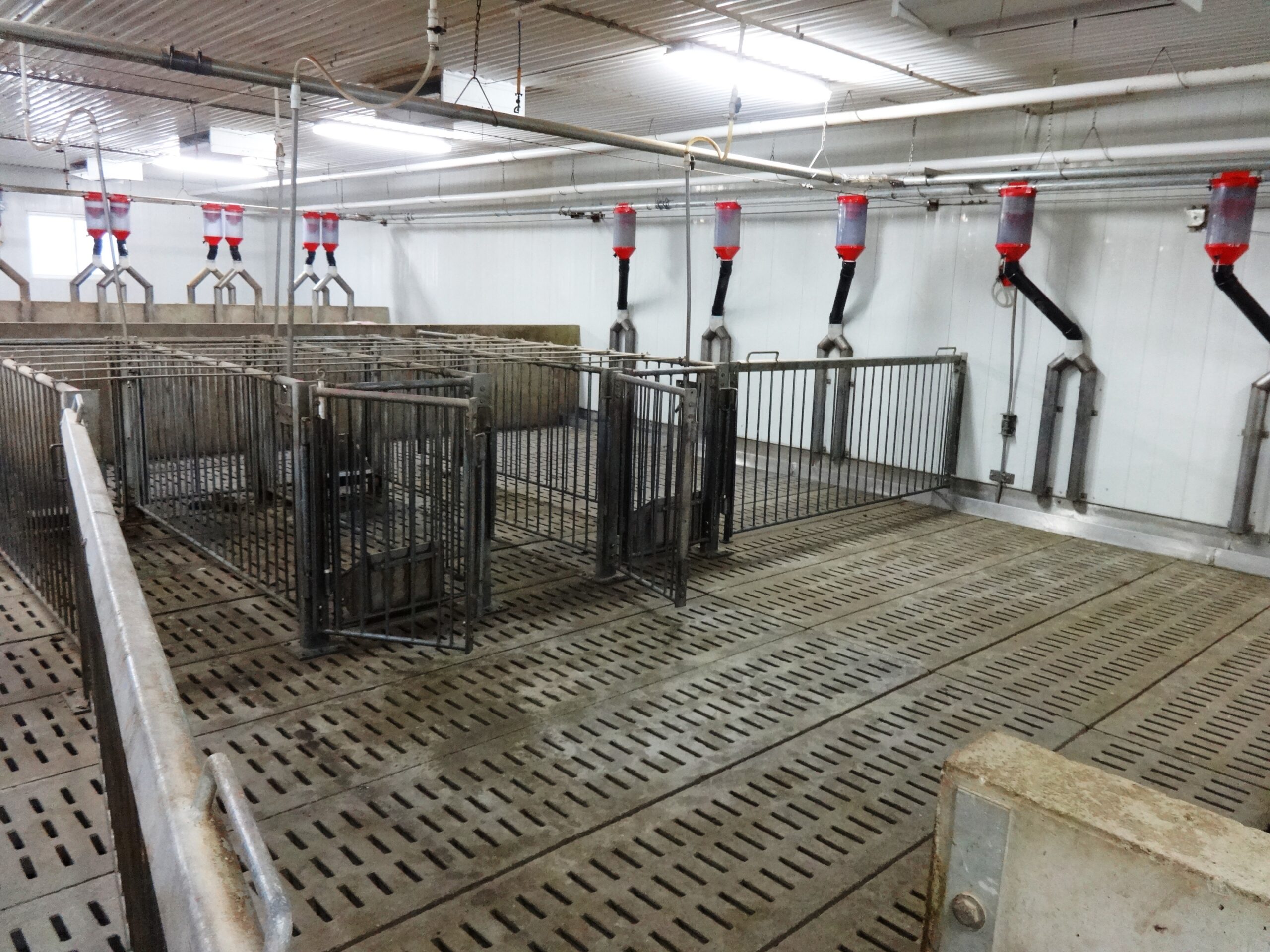
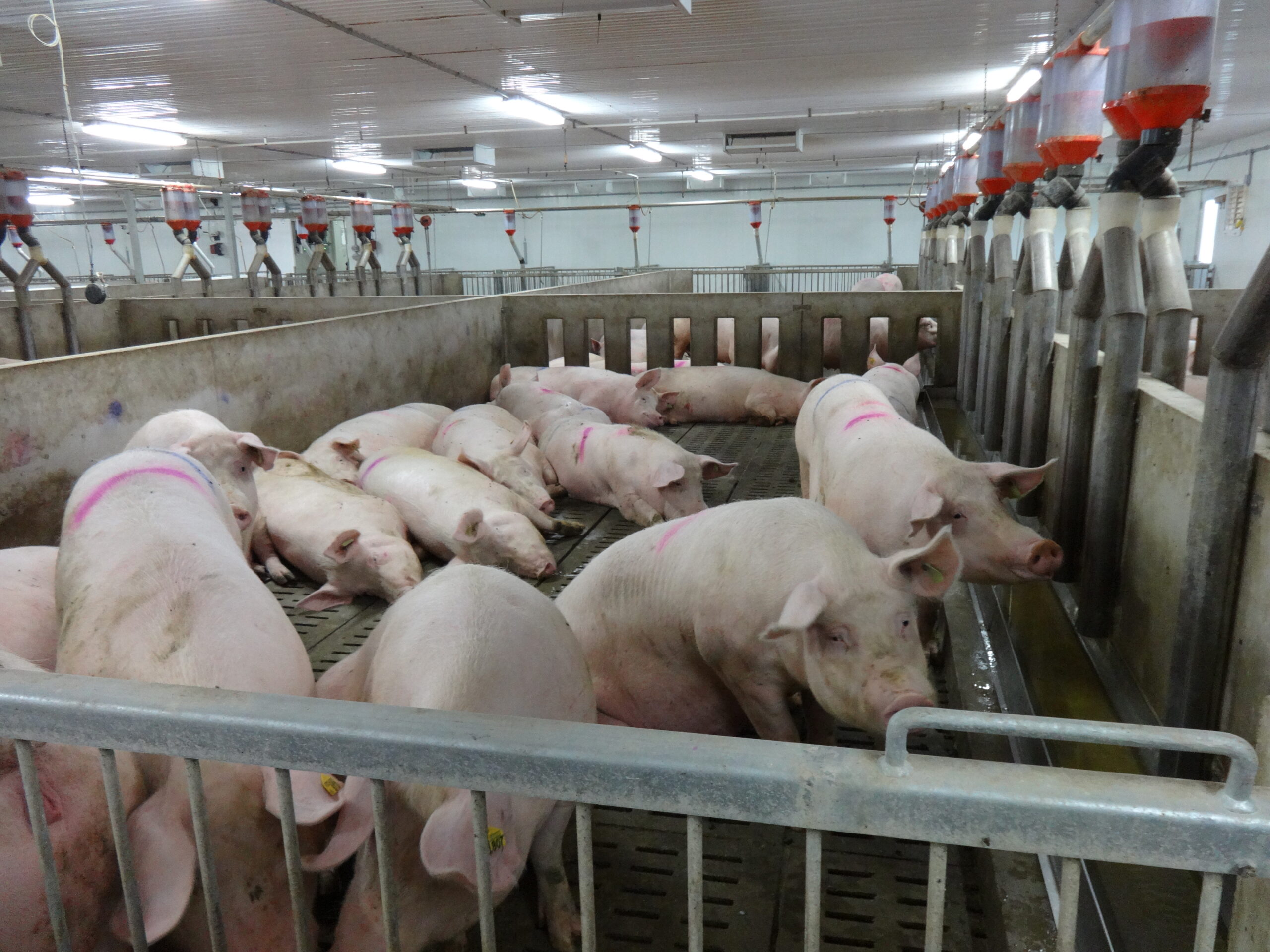
The gestation room is laid out with high ceilings and is well lit, with a 10’ wide central alley way and 24 pens either side. The gestation pens are constructed with 4” concrete walls and spindle gates. Adjoining pens have concrete walls with openings to provide air circulation and allow visual and tactile contact between sows. The pens are 13’1” by 24’ in dimension with fully slatted floors of 4″ slats and ¾” gaps. Feed and water is provided in stainless steel troughs running along the full length of one wall per pen. Feed lines run above each trough, with five feed drop lines per pen and stainless steel drop tubes.
Geene houses 15-17 sows per pen, varying the group size depending on the size of sows. For example, smaller sows will be housed at 17 per pen, larger sows at 15 per pen providing a space allowance ranging from 18.5-21 ft² (1.7-2.0 m2). The group pens can house 800-900 sows in total, and there are additional pens to house 180-200 gilts. There are 364 breeding stalls and 64 gilt stalls. Geene also included an expansive boar exposure area for gilt development.
Feed drops occur three times a day, at 6:00, 7:15, and 8:30 AM. Initially, feed was dropped via the five drop tubes along the trough. However, this resulted in an uneven distribution of feed. Geene made adjustments by adding a Y split into the downpipe and divided each feed drop into two, resulting in 10 points for feed distribution along the trough. This allowed more even feed distribution and reduced the intensity of competition among sows at feeding.