The Linton Farm
Dave Linton runs a small family farm near Walton, Ontario. He switched to group housing in 1997 and has been refining his practices ever since.
Overview
Dave Linton transitioned to group housing in 1997 and has continued refining the system ever since. Before transitioning to group housing, he used conventional gestation stalls as they were standard practice at the time. Once he decided to make the switch, he visited group-housed sow barns in Michigan where he saw firsthand how such systems could function in practice. He also drew inspiration from large-scale free-range operations in Sweden, where sows are grouped by 10–12 animals.
Based on these observations, Dave designed a naturally ventilated system using solid-floor pens housing 10–12 sows per group. Dave also likes his system because it allows for better observation of the animals during daily chores and retains the flexibility to adapt management decisions based on what he sees in the barn. Sows are fed twice per day, and during the morning feeding additional straw is pulled down as foraging substrates. Feed is distributed at both the front and back of the pen to spread intake and reduce competition. These routines allow Dave to walk the pens twice daily, assessing sow health, body condition, and behaviour. For him, regular observation is an essential part of good stockmanship, enabling early detection of issues and timely management decisions. The system has proven effective on his farm, consistently achieving a farrowing rate of approximately 90%.
Gestation Room Layout
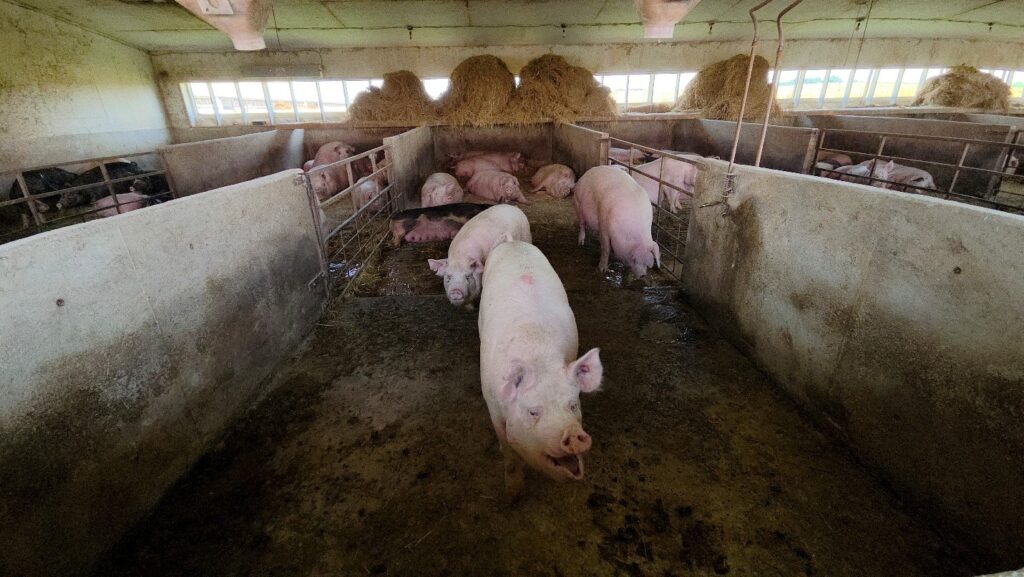
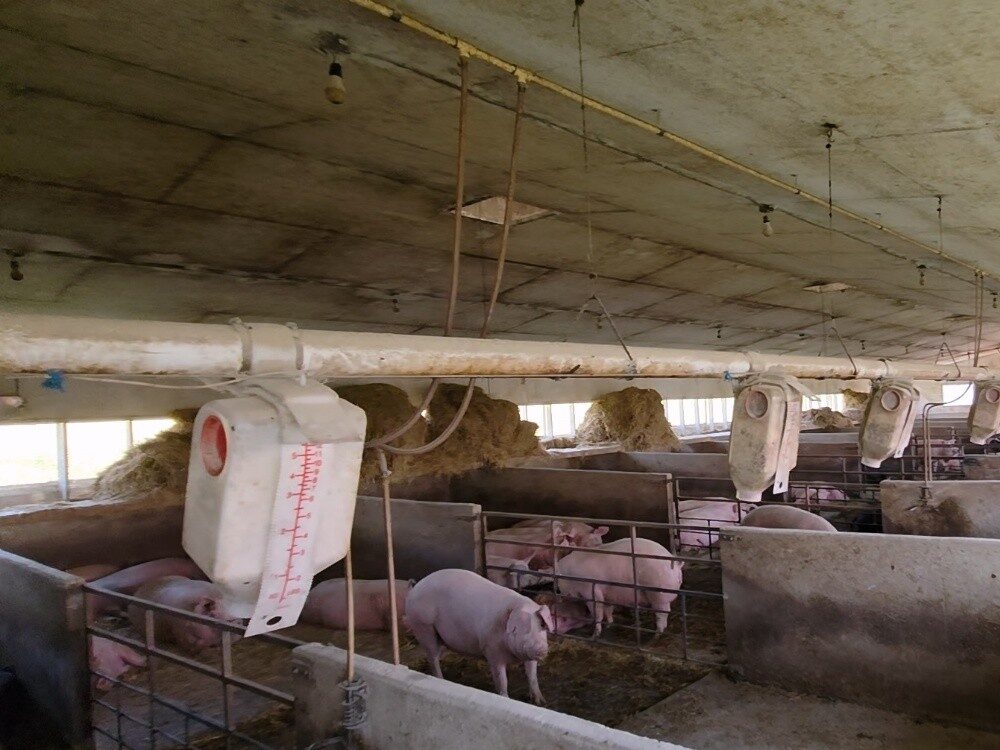
Based on his observation of other group-housing systems, Dave designed a naturally ventilated barn with pens sized to house 10-12 sows each. Each pen is structured into three functional areas: a front floor-feeding area, a central wet/dunging area, and a straw-bedded lying area at the back. Straw is supplied using round bales, which are placed with a skid steer on a wooden platform on top of the lying area. During cleaning, sows can be temporarily locked into the back area while the dunging area is cleared. A single round bale typically lasts 7–10 days in each area.