Egli's Farm
Marcel Egli runs a 300 sow organic farm near Blythe, Ontario.
Overview
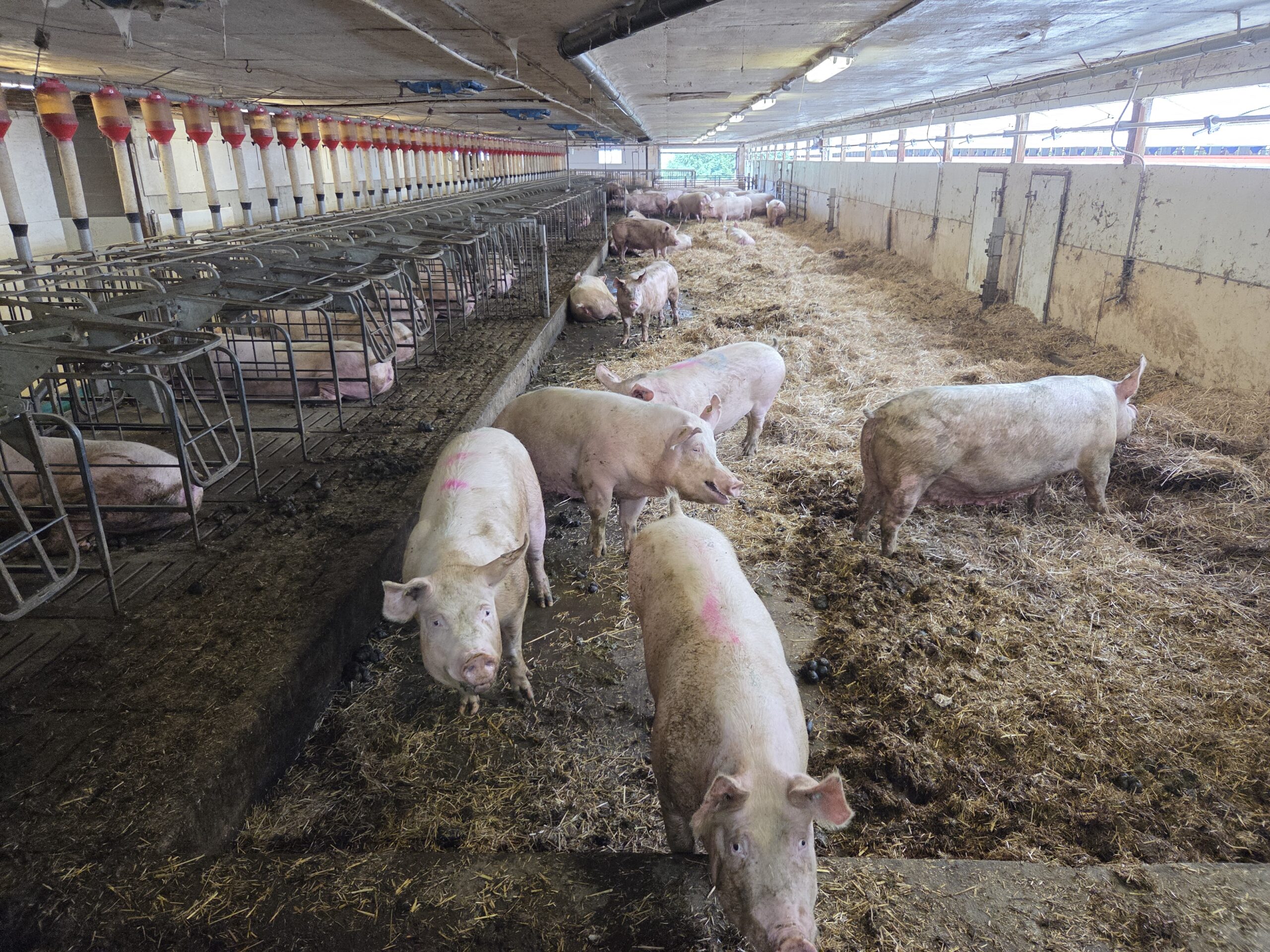
Marcel Egli started his journey in the swine industry practicing conventional production, but switched to group housing in 1996. Shortly after making the conversion, he switched to organic production. After nearly two decades with alternative housing, Marcel says the key ingredients for success are straightforward: sufficient space, adequate nutrition, right environment, and good people. He emphasizes the importance of ample lying space, natural light, good air quality and understanding animal behaviour to ease handling. His barn is a reminder that group housing is more than a regulatory requirement: it’s a practical and profitable working system that can deliver both animal welfare and farmer satisfaction.
Gestation Room Layout
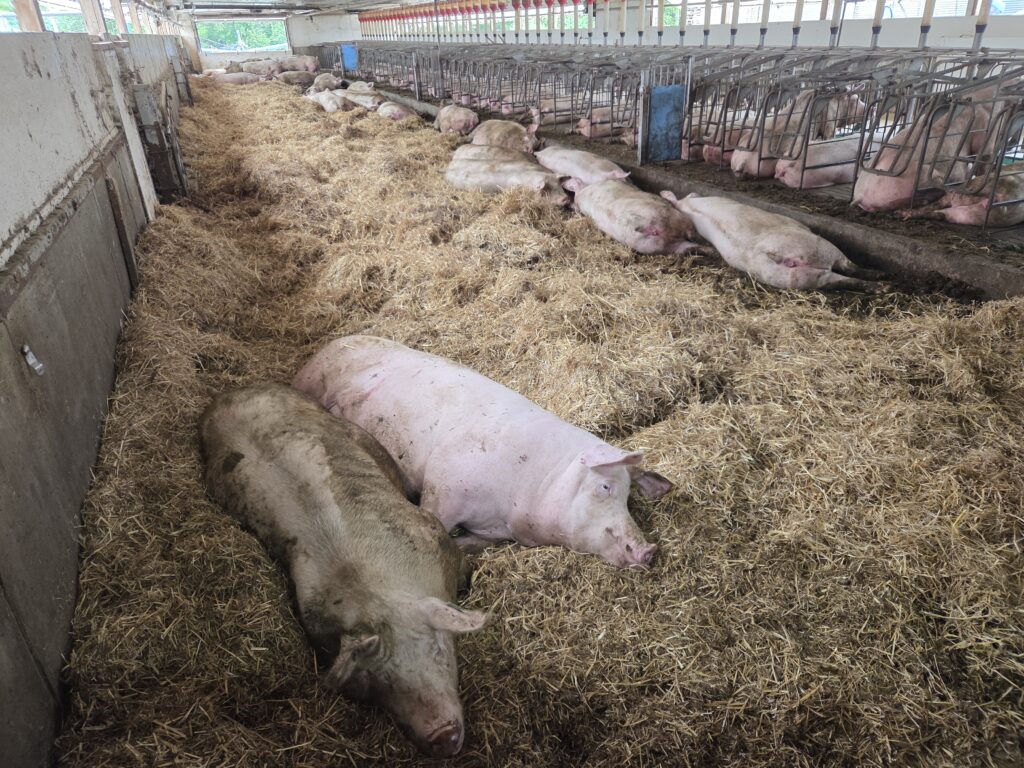
In the group gestation pens, the sows feed in individual (gated free access) stalls and lounge in a large common area bedded with straw – each pen has at least 28 square feet of space in the common area. The barn is also naturally ventilated, fostering a quiet and clean environment. In the winter, the straw also provides some insulation in the winter.
The gated free access stalls allow for each animal to eat at their own pace, and for Marcel to easily observe if any animals are off feed. Feeding all of the animals at the same time, multiple times a day, also helps to reduce aggression and competition.
The straw in the common area is changed at a manageable pace, with the straw directly behind the stalls replaced monthly, while straw further away may be left for up to three months.
Herd Management
Marcel manages his pigs on a five-and-a-half week batch schedule, with his 300 sows divided into four groups. Practicing batch farrowing ensures a static group of sows, which can reduce aggression when the animals re-enter group housing.
The sows are fed four times a day, and the stalls allow for customized feeding when needed. Marcel is experimenting with feeding hay bailage to provide more fibre, gut fill, and additional enrichment. He is working with his veterinarian to ensure that his animals stay happy and healthy, and to evaluate how the base ration may need to be altered.
With Topigs genetics, Egli’s farm sees an average of 15-16 piglets born alive, and weans an average of 13 piglets.