DeVries' Farm
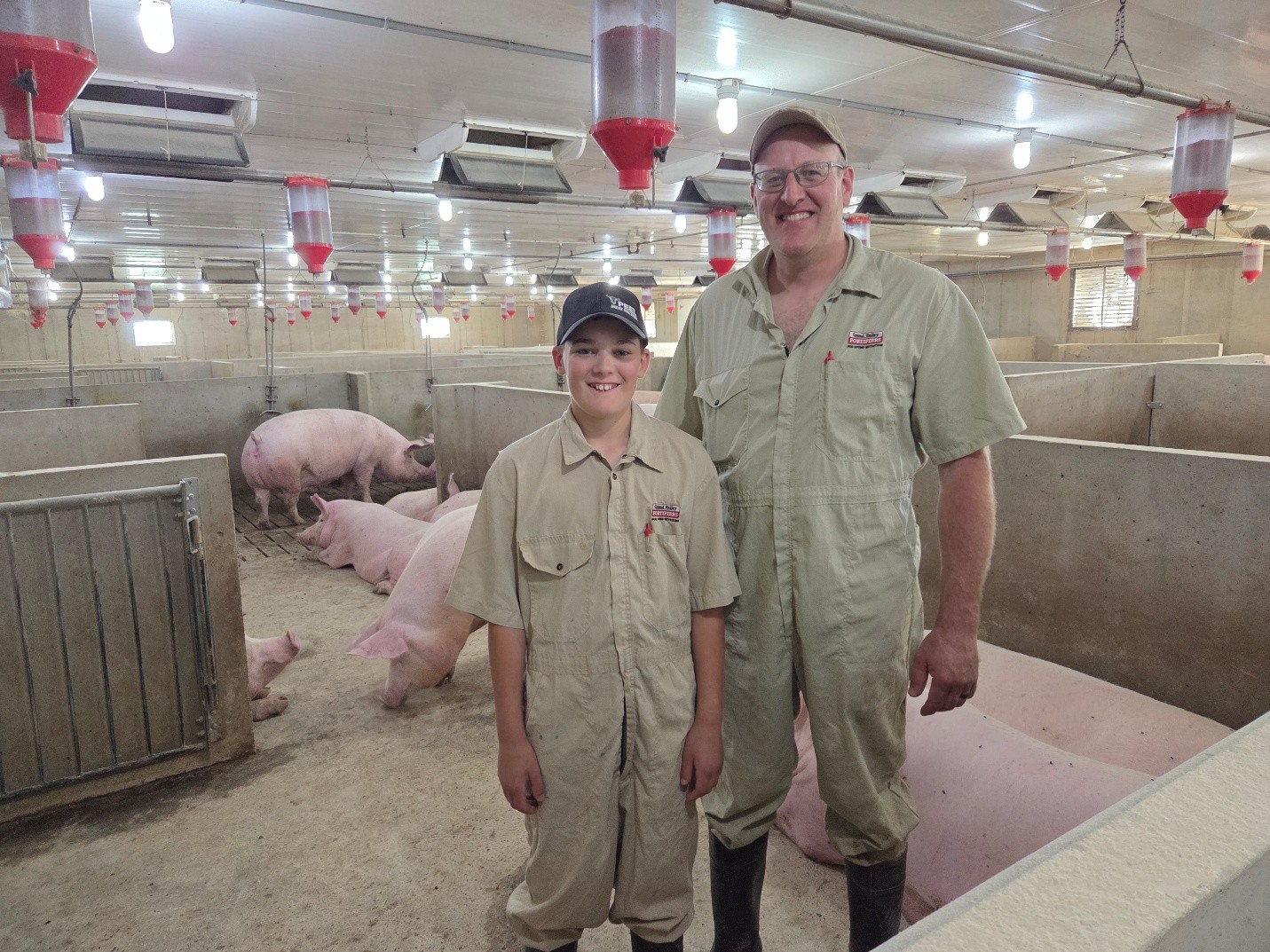
Dave DeVries runs a farrow-to-finish operation near Drayton, Ontario. They completed a conversion to a floor feeding system in 2018.
Overview
Dave DeVries runs a 350-sow farrow-to-finish operation near Drayton, Ontario. Before making their conversion, Dave talked to other producers, did background research, and visited farms that had made their own conversions. He was intrigued by the simplicity of floor feeding, and commented on how calm and quiet the sows were.
For this farm, ease of management was key in making their decision. DeVries wanted a system that did not require extensive training, and that had a layout that was comfortable for his sows. The low input needed for floor feeding accompanied by the mostly solid flooring made pursing floor feeding an easy decision.
Dave is very happy with the investment he made to build this system and would never go back to stall housing. He maintains an 85% farrowing rate, just under 12 weaned per litter, which he expects to see an increase as he changes to a new genetic line. For Dave, the three factors of success to group sow housing are being open-minded, watching the animals while walking the pens, and good genetics. Dave has demonstrated to us that floor feeding can work, when it is done right.
Gestation Room Layout
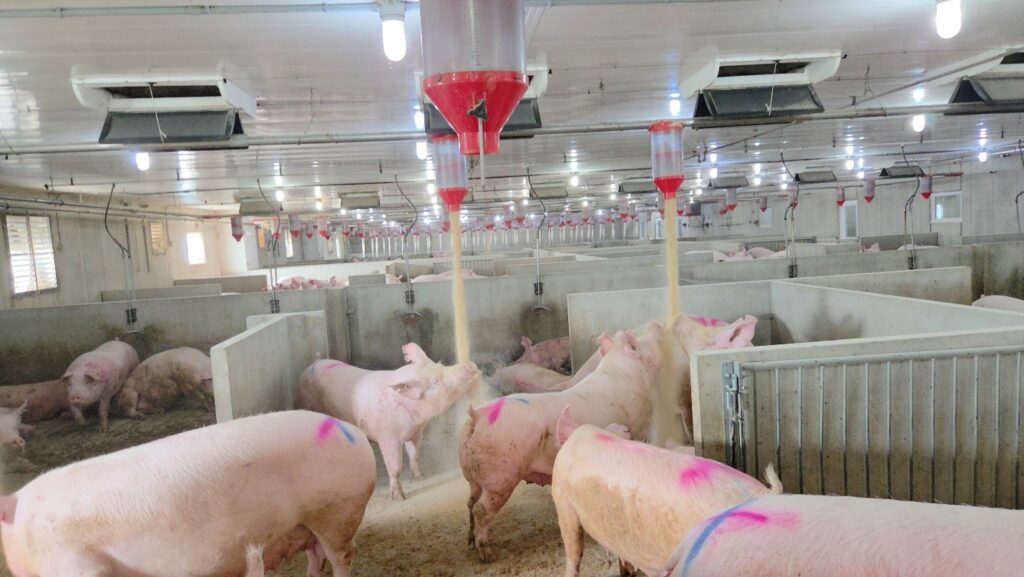
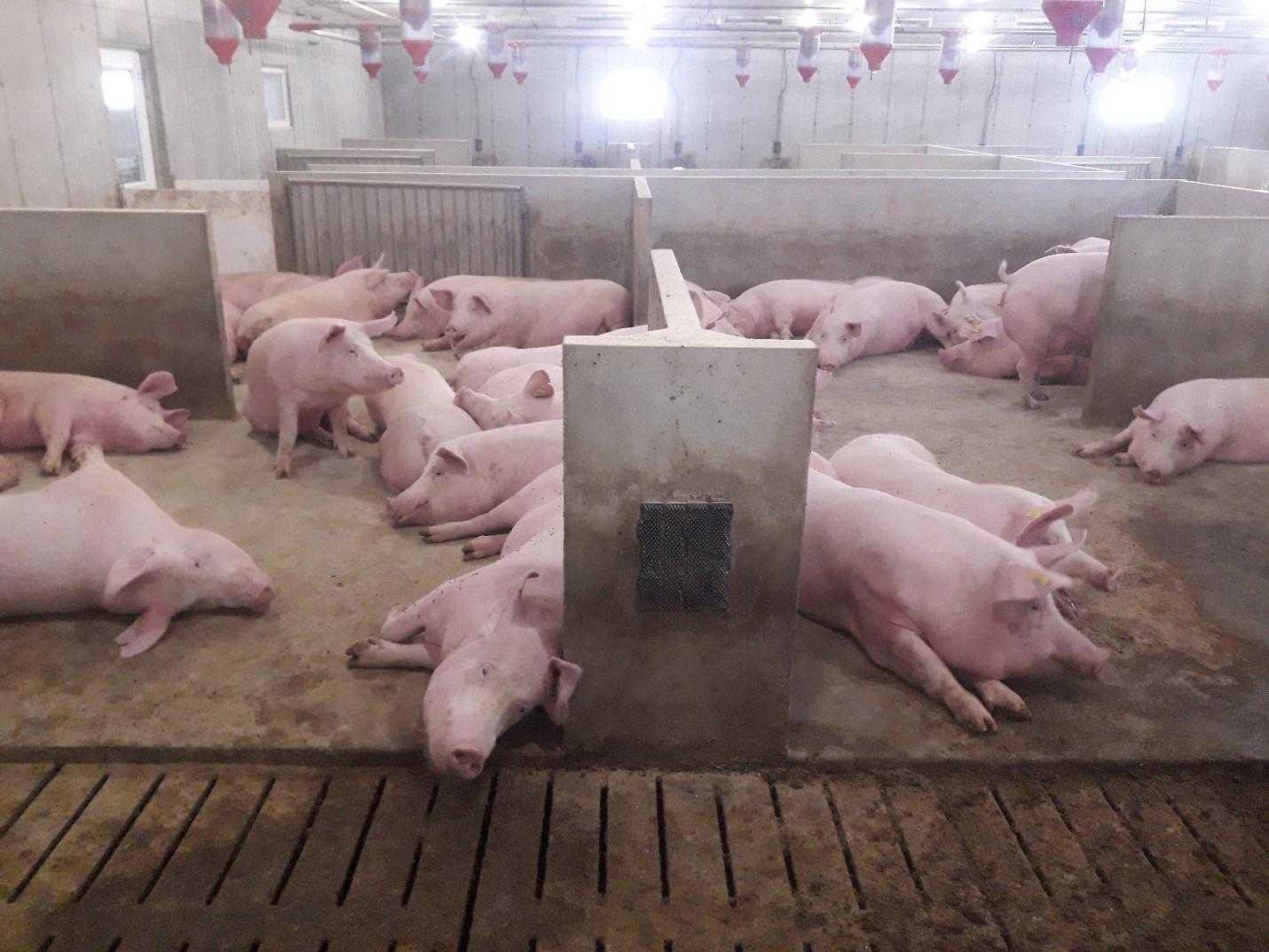
The DeVries’ gestation room has 8 group pens, which each house 25 to 30 sows, depending on the size of the animals. Each pen is equipped with 8 drop feeders, which drop feed 6 times a day on an automated schedule. The pen floors are 2/3 solid and 1/3 slatted, with drinkers situated above the slatted portion to ensure that the solid area does not get wet. Most dunging is kept to the slatted area, and the solid areas remain clean and dry for eating and lying. The pens are also set up with concrete walls that create bays and provide separation if sows fight.
To complete heat checks with a boar, there is a gated area at the front of each pen, but Dave has found that it is easy to identify which sows are in heat based on their behaviour while he walks the pens.
Herd Management
DeVries moves his sows into group gestation four days after breeding, making the move in the afternoon. He has found that dropping feed before the sows move in can reduce aggression, and that moving in the afternoon ensures that they sows have eaten and are not overly hungry.
Some think that floor feeding requires more labour input, but Dave has found the opposite. He spends about 20 minutes walking the gestation pens in the morning, and then again in the afternoon. He also watches the sows feed regularly, keeping an eye on any over- or under-conditioned sows. If needed, sows can be moved out of the pen to alter their diets, or drop feeders can be reprogrammed to adjust how much feed is dropped.
Dave has also found that a high-fibre diet can reduce aggression, as it increases satiety. He feeds a diet that includes 30% wheat shorts that he mills on farm.