The O'Neil Farm
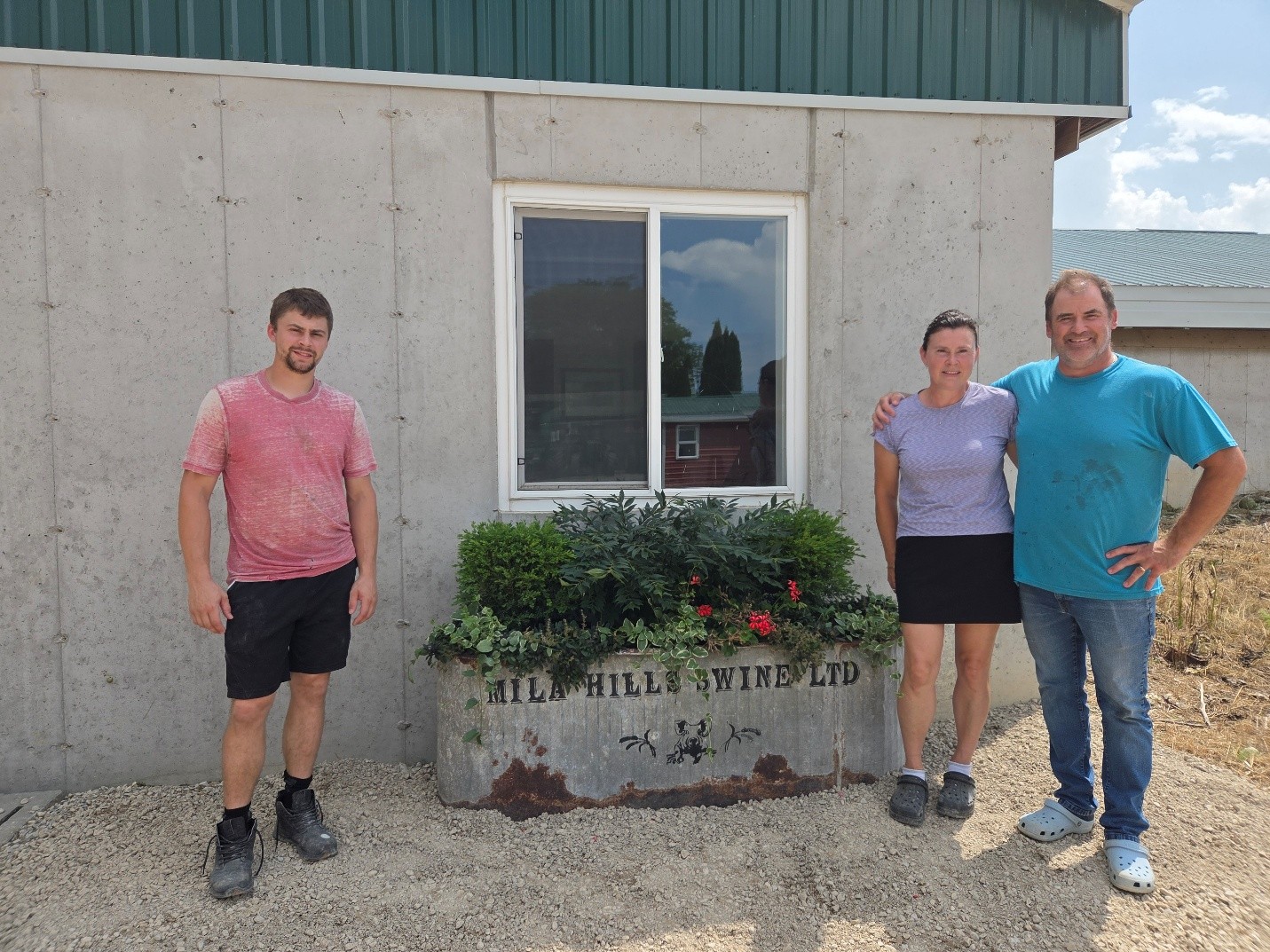
Ursula and Will O'Neil run a farrow-to-finish operation near Warwick, Ontario. They built a new group housing barn in 2021.
Overview
Ursula and Will run a 325-sow, farrow-to-finish operation. Weekly farrowing maintains a continuous flow of sows moving in and out of the farrowing unit, while also supporting a steady number of finished pigs marketed each week. Sows are bred in mating stalls and remain there for approximately 30 days until pregnancy confirmation, after which they are moved into a dynamic group pen housing around 180 sows. The group is managed with six ESFs, resulting in 25–30 sows per feeder, an optimal distribution.
Their current group-housing sow barn was built four years ago. Prior to adopting this system, Ursula had experience with a range of housing and feeding approaches, including gestation stalls, small group pens of 10 sows with floor feeding, and an earlier model of ESF. When selecting a group-housing system, she emphasized the importance of consulting with veterinarians and other producers, learning from shared experiences, and applying lessons gained through trial and error. For the current ESF setup, a long exit walkway was required, so the barn was designed with sufficient width to accommodate this feature, with slats oriented perpendicular to the walking route to improve footing and flow.
Reflecting on the success of their operation, Ursula and Will stress the importance of close observation of animal behaviour as a constant guide for fine-tuning their system. They also make a point of staying informed about new developments in the industry, using this knowledge to identify opportunities for improvement. Anticipating future challenges has shaped how they designed their barn, creating an environment that is good for the animals and just as importantly, a good work environment. Changes such as installation between the farrowing and sow units has also seemed to help with the PRRS problem the farm had experienced in the past.
Gestation Room Layout
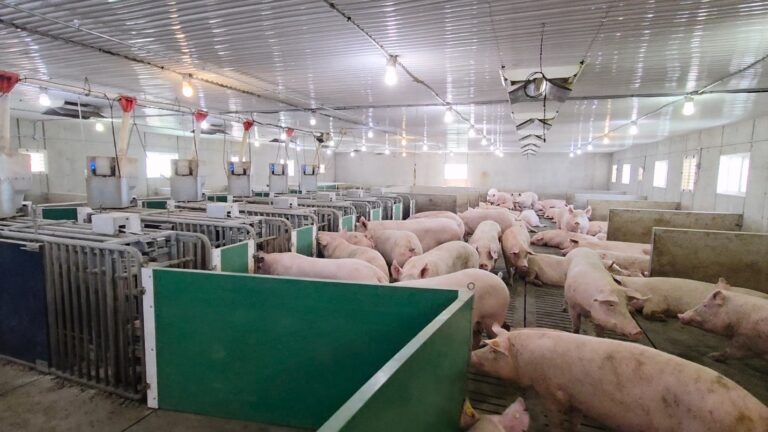
The O’Neil farm practices dynamic group pen housing with around 180 sows being in the group at a time. The group is managed with six ESFs, resulting in 25–30 sows per feeder, an optimal distribution. This feeder-to-sow ratio has proven to be a critical factor in maintaining calm behaviour and allowing sows to eat at a comfortable pace. The ESF system is equipped with a built-in scale, allowing sows to be automatically weighed after feeding. This provides valuable data for individual monitoring and feed adjustment. The gestation area also includes solid-floor lying bays. There is a designated area for gilt training, for the young females to learn to use the feeder before joining the dynamic large group.
Group management practices
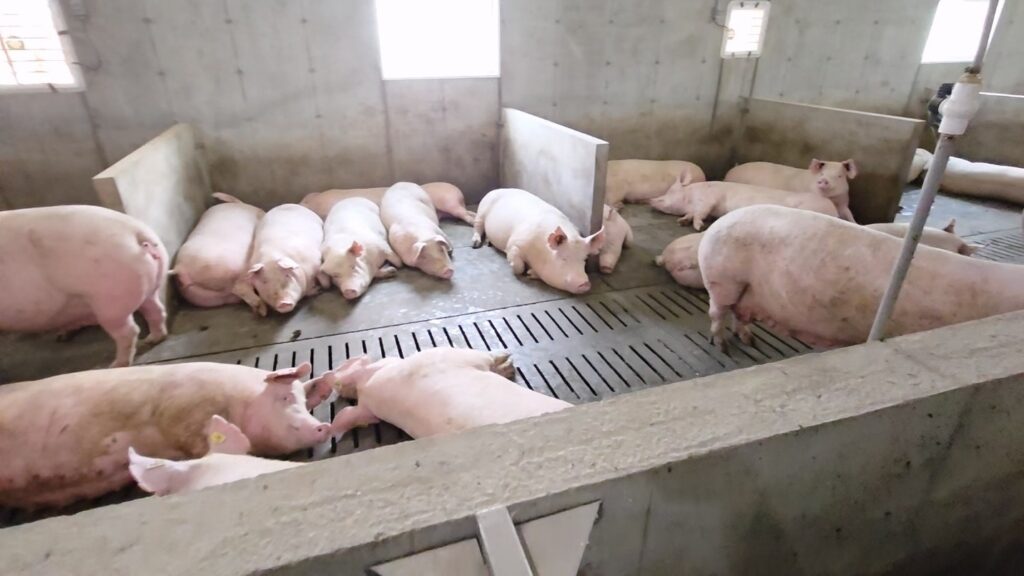
Reflecting on the success of their operation, Ursula and Will stress the importance of close observation of animal behaviour as a constant guide for fine-tuning their system. An especially important observation to make is sow eating behaviour, and making adjustments based on that input. The group is managed with six ESFs, resulting in 25–30 sows per feeder, an optimal distribution. This feeder-to-sow ratio has proven to be a critical factor in maintaining calm behaviour and allowing sows to eat at a comfortable pace. One key management adjustment involved increasing the maximum feeding time per sow from 5 to 20 minutes. Although initially counterintuitive, this change reduced the number of non-eating animals that required intervention. When sows are not rushed, they tend to eat more slowly and complete their ration in a single visit, rather than cycling repeatedly through the feeder. This improves individual feed intake and body condition, while also freeing feeder access for other unfed sows.
